Progress and Poverty or Why Does Everything Get Worse When It Gets Better?
The Rent Is Too Damn High (1879 Edition)
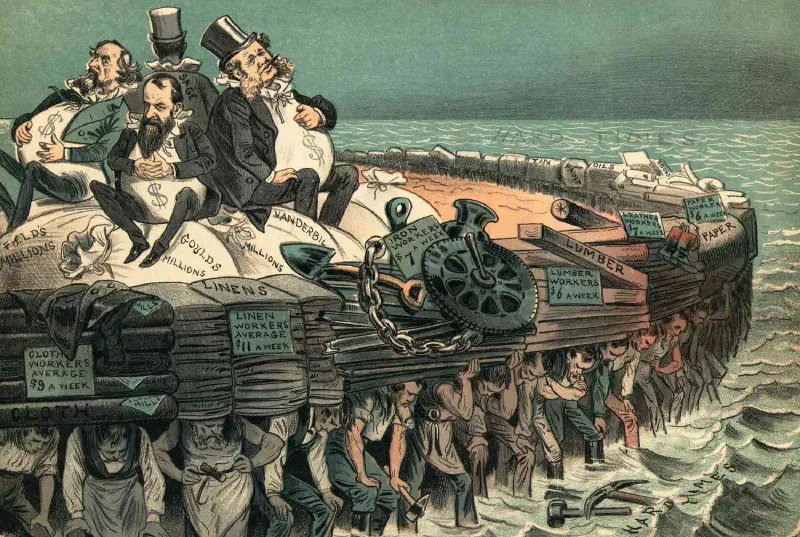
So here’s a weird thing that happened in 1879. A guy named Henry George looked around San Francisco, hich was having a absolutely bonkers real estate boom thanks to railroads and gold and general Western expansion vibes and asked a question that sounds extremely familiar: Why is it that the more prosperous society gets, the more impossible it becomes for regular people to afford anything?
Like, you’d think naively! that when society invents trains and telegraphs and factories and all sorts of productivity-enhancing stuff, everyone would get richer. That’s sort of the whole pitch, right? “Hey, let’s do capitalism and industrial revolution, everyone will be better off.” And yet George noticed that actually what happens is:
- society gets way more productive
- land prices go absolutely ballistic
- regular workers somehow end up roughly as poor as before, just in newer, more modern ways
- landowners get hilariously, stupendously rich for doing exactly nothing.
Seems bad!
A Guy Walks Into An Economic Crisis
Here’s the context, which is absolutely essential because George wasn’t writing in a vacuum, he was writing in a world that looked completely insane. The 1870s were wild. You had:
The Long Depression (1873-1879): Yeah, before the Great Depression got all the naming rights, this was the worst economic crisis anyone had seen. Banks failing everywhere, unemployment through the roof, the usual “financial innovation leads to catastrophe” story that we’re all familiar with by now.
Robber Barons Doing Robber Baron Things: The Gilded Age was in full swing. Guys like Jay Gould were manipulating entire markets for fun and profit. Railroad monopolies were charging whatever they wanted. Standard Oil was Standard Oil-ing. Income inequality was at levels that would make today’s billionaires say “okay maybe tone it down a bit.”
Urbanization Going Nuts: Everyone was moving to cities, which meant urban land was becoming insanely valuable. San Francisco, where George lived, grew from 57,000 people in 1860 to 234,000 in 1880. That’s like a 4x in twenty years! The land underneath those people? Worth approximately infinity dollars.
Labor Getting Squeezed: Despite all this “progress,” workers were getting absolutely destroyed. Twelve-hour workdays, child labor, the Great Railroad Strike of 1877 where federal troops literally shot striking workers. Not great!
George looked at all this and was like: “Wait a minute, this makes no sense. We have more wealth than ever before. We can produce more stuff more efficiently than at any point in human history. WHY IS EVERYONE EXCEPT LANDOWNERS STILL POOR?”
The Theory (It’s Always The Land)
So here’s George’s big insight, translated into modern financial blogger speak:
Imagine you’re a regular person in 1870s San Francisco. You work at some job, doesn’t matter what, maybe you make widgets or whatever. Thanks to PROGRESS™, widget-making technology gets better. You can now make twice as many widgets per hour! Amazing! You’re gonna be rich!
Except… no. Here’s what actually happens:
- More productive workers means more profitable businesses
- More profitable businesses means they can afford to pay more for land
- Landowners raise rents to capture all that extra productivity
- You, the widget-maker, end up with exactly the same purchasing power as before
- The landowner, who did literally nothing except own land that they probably inherited or bought cheap decades ago, captures all the gains
It’s like if every time you got a raise, your landlord somehow knew about it and immediately raised your rent by exactly that amount. Except it’s not just your apartment, it’s the land your employer rents, the land the stores rent, the land everything sits on. The entire economy becomes a machine for transferring productivity gains to landowners.
George called this the “law of rent” and honestly? Kind of checks out.
| Scenario | Worker (Makes Widgets) | Business (Sells Widgets) | Landowner (Owns the Dirt) |
|---|---|---|---|
| Before Progress | Earns a basic wage | Makes a standard profit | Collects a standard rent |
| After Progress | Gets a small raise, but cost of living (rent) goes up by the same amount. No net gain. | Makes more profit initially, but has to pay higher rent for their factory/office. No net gain. | Does nothing. Raises the rent to capture all the new value created by the workers and businesses. Gets very rich. |
The Solution (This Is Where It Gets Spicy)1
Now, most economists who notice a problem go: “Well, that’s unfortunate, but what can you do? Market forces, invisible hand, etc.”
Not Henry George! This absolute madman proposed something called the Single Tax, which is exactly what it sounds like: replace all taxes with one giant tax on land values. Income tax? Gone. Sales tax? Eliminated. Capital gains tax? In the trash. Just tax land, baby!
The logic is actually pretty elegant:
- Land isn’t produced by anyone (it’s just… there)
- Land values are created by society collectively (your land is valuable because of what’s around it)
- Therefore society should capture those values
- This would make speculation impossible and force productive use of land
- Plus you wouldn’t discourage actual productive activity with taxes on labor or capital
It’s simultaneously the most radical and most conservative idea ever. Radical because it would completely reshape property rights. Conservative because it’s basically just making markets work better by removing a massive source of rent-seeking (literally).
Why This Matters Now (Spoiler: Everything Is Still Exactly The Same)
| Economic Factor | 1870s San Francisco | 2020s Tech Hubs (SF, Austin, etc.) |
|---|---|---|
| Source of Progress | Railroads, Telegraph, Factories | Internet, AI, Software |
| Impact on Productivity | Massive Increase | Massive Increase |
| Primary Beneficiary | Landowners | Landowners & Real Estate Investors |
| Worker Experience | Wages stagnate as rents rise | Salaries feel stagnant as housing costs consume gains |
| The Hot Commodity | Urban Land | Urban Land |
| The Public Cry | “The Rent Is Too Damn High!” | “The Rent Is Too Damn High!” |
Here’s the thing that’s absolutely bananas about “Progress and Poverty”: George was describing 1870s San Francisco, but he could have been describing 2020s San Francisco and basically nothing would need to change.
Tech companies create trillions in value? Flows to Bay Area landowners. Remote work means people can live anywhere? Flows to landowners in Austin and Miami. Productivity improvements from AI? You already know where this is going.
We’ve literally spent 150 years getting more productive and the basic pattern George identified, productivity gains flow to landowners rather than workers or even capital hasn’t changed. We just got better at obscuring it with financial engineering and complexity.
The Reception (Everyone Loved It Except People Who Mattered)
“Progress and Poverty” became one of the best-selling books of the 19th century. It outsold everything except the Bible. George became a celebrity, almost got elected mayor of New York, and inspired political movements worldwide.
And then… nothing happened. Well, not nothing,a few places implemented land value taxes (parts of Pennsylvania, Taiwan, Singapore kind of), and they worked pretty well! But mostly the people who owned land were like “hmm, interesting theory, definitely food for thought” and then continued owning land and collecting rents.
Because here’s the fundamental problem with George’s solution: the people who would need to implement it (politicians) are elected by people who vote, and the people who vote are disproportionately people who own property, and people who own property don’t typically vote to tax themselves into oblivion. Seems predictable!
The Lesson
The real lesson of “Progress and Poverty” isn’t necessarily that we should implement a single tax on land (though George would disagree). It’s that sometimes the most important economic insights come from asking really obvious questions that everyone else is too sophisticated to ask.
Like: “Hey, if we’re all getting so much richer, why is everyone still poor?”
Sometimes the answer is complicated. Sometimes it’s just rent.
By the way I decided take this very issue with chatGPT and you can find the discussion here with Australia as the context, very interesting one indeed.
Disclaimer: This is not investment advice. Unless you’re investing in land, in which case Henry George would like a word. Also, past performance of 19th-century economic theories does not guarantee future results. The value of your land may go up or down, but probably up, which is kind of the whole problem. ↩︎