Crowds and Power or Why Everyone at Your Office Acts Weird in Meetings
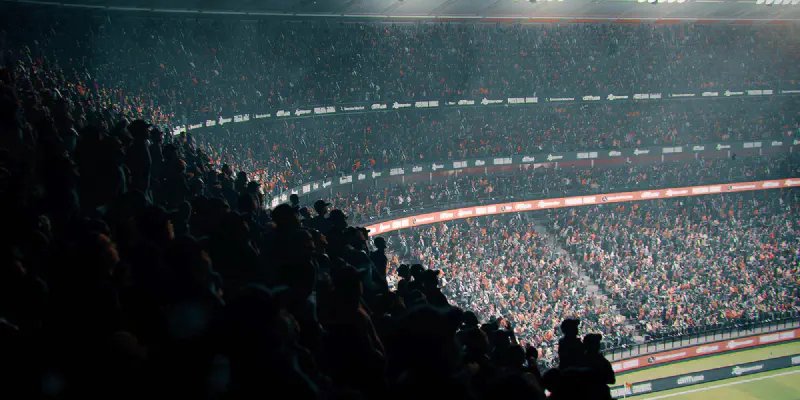
So here’s a fun thing about human nature, Elias Canetti spent thirty-five years thirty-five years! writing a book about why people in groups act completely insane. This seems like a long time to think about crowd behavior, but then again, Canetti lived through both World Wars, saw the rise of Hitler, Stalin, and Mussolini, and watched millions of seemingly rational individuals turn into howling mobs. So, you know, he had some material to work with.
“Crowds and Power” (1960) is basically Canetti’s attempt to explain why your neighbor Steve, who normally just wants to talk about lawn care, will suddenly paint his face and scream at a football game. Or, more darkly, why that same Steve might have joined the Nazi Party in 1933. Same psychological mechanisms! . By the way Susan Sontag has to share one or two about this guy .
The Context or When Everyone Goes Crazy At Once
Here’s the thing you need to understand about when Canetti was writing this: He started working on it in 1925, when he was literally watching crowds tear Vienna apart. He was a Bulgarian Jew living in Austria, which, timing-wise, was not ideal. He watched the July Revolt of 1927, where workers burned down the Palace of Justice. He watched the rise of fascism. He watched his entire world get swept up in mass movements that made absolutely no sense if you thought about them rationally, but made perfect sense if you understood crowds.
The standard explanation at the time was either (1) Marxist class struggle stuff, or (2) Freudian unconscious drives stuff. Canetti thought both explanations were, and I’m paraphrasing here, “missing the entire point.” His take was: crowds have their own logic, their own desires, their own weird internal dynamics that have nothing to do with economics or repressed sexuality. A crowd wants to grow. A crowd wants to destroy. A crowd wants to feel equal. These aren’t metaphors. These are, in Canetti’s view, actual properties of crowds as entities.
The Theory or Your Meeting Is Actually a Pack Hunt
The basic Canetti thesis goes something like this:
First, there are four essential attributes of crowds:
- Crowds always want to grow (this is why your book club now has 47 members)
- Within crowds, there’s equality (suddenly the CEO and the intern are both just faces in the mob)
- Crowds love density (mosh pits, basically)
- Crowds need direction (toward the Capitol building, toward the referee, toward whatever)
Second, power is basically about not being touched. Think about it: the king sits alone on his throne. The boss has the corner office. Social distance equals power. Meanwhile, in crowds, everyone’s squished together, which Canetti argues is actually the point people join crowds to lose their fear of being touched, to dissolve boundaries. It’s weirdly liberating, which is why flash mobs were briefly a thing.
Third, and this is where it gets dark, Canetti identifies what he calls the “survivor syndrome.” Leaders, especially paranoid dictators are essentially people who are very, very good at surviving while others die. Stalin didn’t just kill millions, he survived millions dying. That’s the power move. The survivor stands alone among the corpses and feels mighty.
The Modern Application or Why Your Zoom Call Is Basically a Medieval Crowd
You might think, “Okay, but this was about Nazis and whatever, surely this doesn’t apply to my life.” Wrong! Dead wrong!
Consider the modern corporation. What is an all-hands meeting but a crowd formation ritual? The CEO stands at the front (power through isolation), everyone else sits together (crowd equality), and there’s a direction (usually “increase shareholder value” or “disrupt the widget industry”). The company off-site? That’s what Canetti would call a “feast crowd” temporary equality through shared consumption of mediocre conference food.
Or think about Twitter or X(I like twitter). What is a Twitter pile-on but a “baiting crowd” in Canetti’s terminology? Everyone gets to feel equal by collectively destroying someone who tweeted something dumb about beans or whatever. The crowd forms, attacks, dissolves, reforms around a new target. The dynamics are identical to medieval mob justice, just with worse jokes.
Stock market bubbles? Classic crowd behavior. Everyone piles into GameStop not because of fundamental analysis but because the crowd wants to grow, wants direction (to the moon!), wants density (diamond hands together!). The crowd doesn’t care about efficient market hypothesis, the crowd wants to feel the dissolution of individual boundaries in the warm embrace of collective insanity.
The Punchline or: We’re All Still Crowds
The disturbing insight of Canetti’s work and why it took him 35 years to write it—is that crowd dynamics aren’t aberrations. They’re not what happens when civilization breaks down. They’re the foundation that civilization is built on. Every institution, every power structure, every social movement is just crowds and power dynamics in different costumes.
The paranoid dictator surviving while others die? That’s just an extreme version of every corporate layoff where the executive team stays intact. The mob destroying the palace? That’s your Twitter mentions when you defend the wrong Star Wars movie. The crowd seeking density and equality? That’s every music festival, every protest, every religious gathering, every sports event.
Canetti wrote “Crowds and Power” because he lived through the age when crowds got technological amplification, radio, mass media, modern propaganda techniques. He wanted to understand how millions of reasonable people could become unreasonable together. But here’s the thing, we’re living through an even more intense amplification. Social media is crowds at the speed of light. Meme stocks are crowd dynamics with leverage. QAnon is basically Canetti’s thesis with a Facebook account.
The book is deliberately anti-systematic. Canetti didn’t want to create a grand theory that explains everything, because that’s what crowds do. Instead, he collected examples, patterns, observations. He was suspicious of systems because systems become crowds, and crowds, as he spent 35 years documenting, are dangerous even when they’re just trying to pick a restaurant for lunch.
So next time you’re in a meeting and everyone suddenly agrees on something that made no sense five minutes ago, or you find yourself retweeting something you haven’t really thought about, or you wonder why the office holiday party feels weirdly aggressive, remember Canetti already explained this. You’re in a crowd. The crowd wants to grow. And somewhere, someone is using this moment to accumulate power by standing just a little bit apart from everyone else.
Anyway, calls on crowd dynamics, puts on individual rational thought. Risk management is when you recognize you’re in a crowd. Actual risk management is getting out before everyone else realizes they’re in one too.